DEVELOPMENT · BUSINESS SYSTEMS · PALM BAY, FL

Custom software development for Melbourne & Brevard County businesses

Hively is a software development company in Palm Bay, Florida. We build the custom software that businesses in Melbourne, Florida and the rest of Brevard County run on: operations dashboards, customer portals, dispatch systems, AI phone hosts, and the integrations that tie them to QuickBooks, Toast, Stripe and Google Calendar. Every build starts with a free consultation and gets scoped before any work begins. Nothing is sold off a menu.

CASE STUDIES

Software we've built for real businesses

Every project below is real software built for a real business. Three of them run in production every day. The roofing platform is built and running as a pilot, waiting on the client's sign-off before it replaces their current website. Proof over promises is the same standard we hold our marketing work to.

Electrical contractor — anonymized screenshot of the system Hively built
OPS PLATFORM · IN PRODUCTION

A production operations platform an electrical contractor runs every day

This commercial electrical contractor here in Brevard County needed more than a website. They needed the software that runs the company. We built them a full operations dashboard, live on their own domain: quote requests and an AI chat assistant from the website, plus a crew board that replaced a shared Excel file with active projects, the schedule, crew assignments, the fleet, tool and ladder check-out, and the key log. It isn't a demo or a mockup. It's the system their office opens every morning.

  • Job and customer management built around how their office actually works
  • Live on the client's own operations domain, in daily production use
  • Delivered in scoped phases, with the client watching progress in a live report

Two-venue restaurant group — anonymized screenshot of the system Hively built
AI PHONE HOST · TOAST POS

An AI phone host answering for a two-venue restaurant group

This restaurant group runs two venues, and the phone never stopped ringing. We built an AI phone host on ElevenLabs and Twilio that answers both lines, each with its own greeting and hours. Mid-call it looks up dishes and prices in the restaurant's Toast menu and texts guests a link to book a table. The menu is cached on our server, because Toast caps menu requests at one per second and a caller shouldn't wait on that. When a guest needs a person, the host transfers the live call to the restaurant's own phone. If nobody picks up, it takes a callback number.

  • One AI host covering two venues with separate menus and hours
  • Answers come from the real Toast menu and prices, read from a cached copy
  • Every call logged and reviewable, so nothing disappears into voicemail
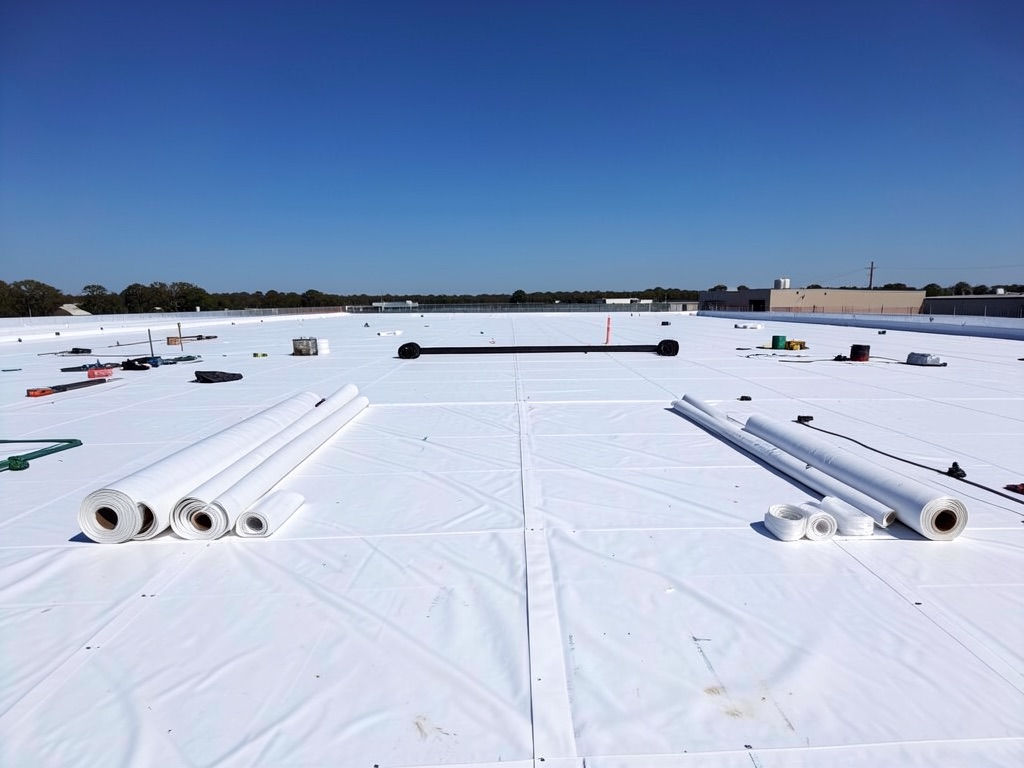
Roofing company — anonymized screenshot of the system Hively built
ROLE-LOGIN PLATFORM · PILOT

A website and lead platform with role-based logins for a roofing company

This roofing company works four lines: residential, commercial, multifamily and exteriors. Each line has its own people, and they shouldn't have to dig through each other's leads. We built a multi-page website with a back office behind it. Quote requests and website chats are sorted by service line as they arrive, everyone signs in with their own login, and each person sees only their line. The admin login sees all of it, plus site traffic. It's running as a pilot until the client signs off on launch.

  • A separate login for each service line, plus an admin view of everything
  • Leads and website chats sorted by service line as they come in
  • Kept apart from the client's live lead flow until sign-off, so test leads never mix with real ones
Appliance-removal companyLIVE SYSTEM
DISPATCH & FIELD OPS

Dispatch and route planning for an appliance-removal crew

An appliance-removal business lives on dispatch: which pickups go on today's route, in what order, and what each stop owes. We built the dispatch module this one runs on. Bookings from the company's website land in the queue, the system puts each route in order by drive time, and every driver gets a private link to the day's stops. No app to install, no password to forget. Drivers mark each stop completed, not home or unable, and log how the customer paid.

  • Stops ordered by drive time, with map links for each leg of the route
  • Fees follow the company's own schedule, and pickups sync both ways with Google Calendar
  • Every query is scoped to the business's own account, so its data stays its own
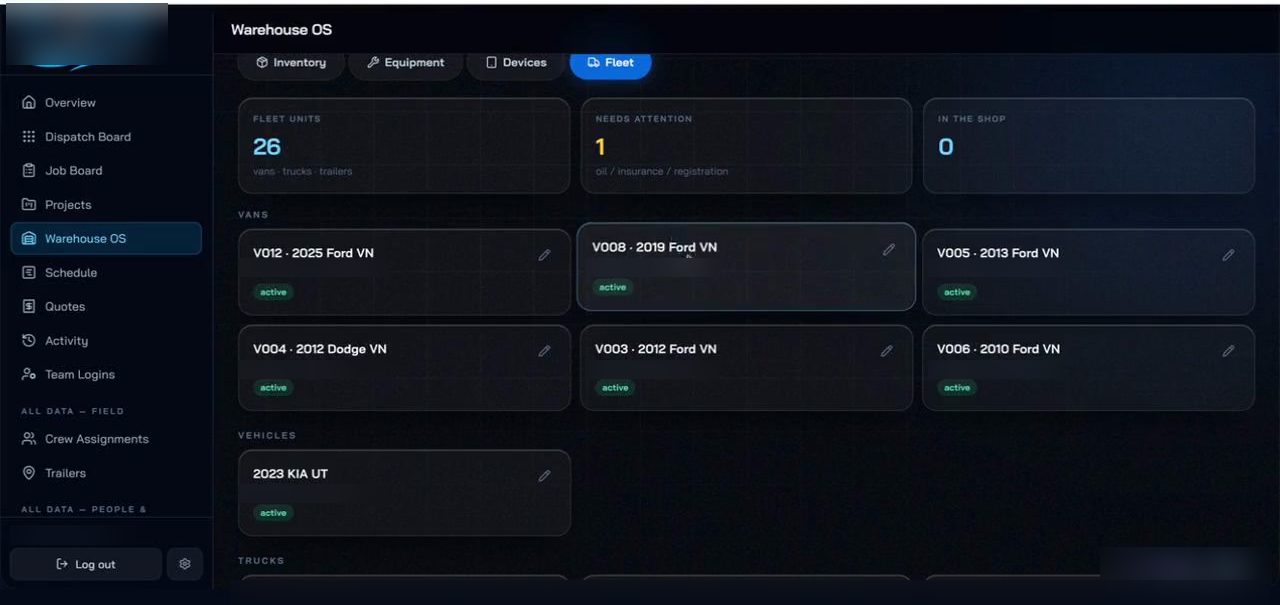
Live client operations dashboard — identifiers blurred

Fleet + warehouse demo module we built for a client's operations suite. Company identifiers blurred.

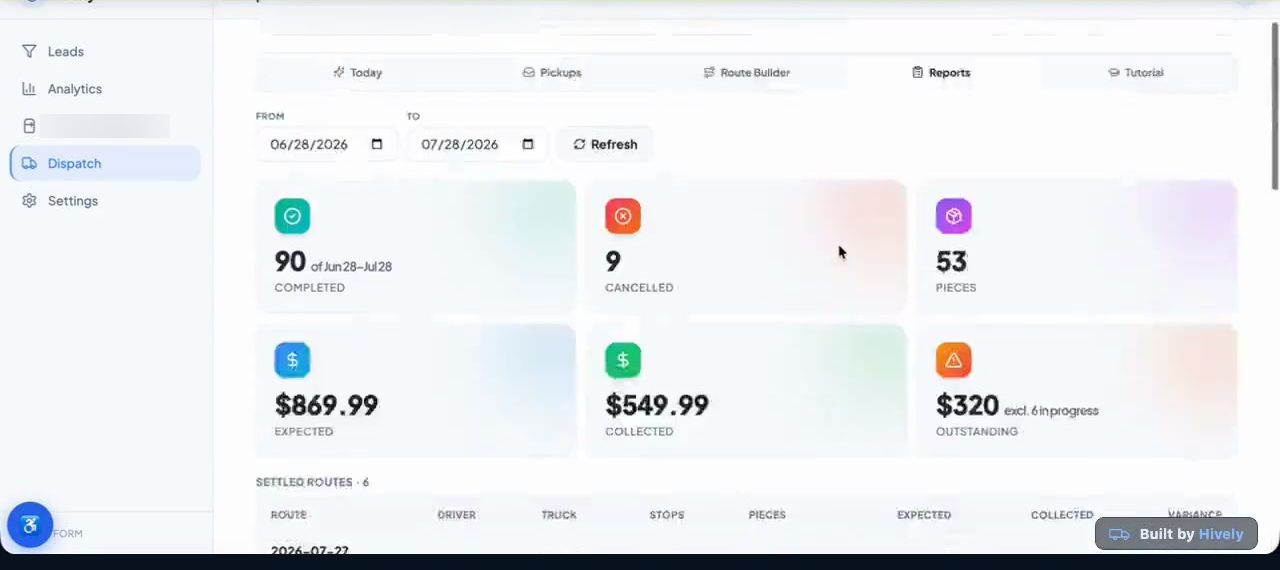
Live client operations dashboard — identifiers blurred

Dispatch reporting — completed jobs and revenue, live. Company identifiers blurred.

WHAT WE BUILD

Portals, dashboards, integrations, and AI hosts

If your business runs on sticky notes, group texts, and a spreadsheet only one person understands, that's not a personality trait — it's a build queue. These are the categories we ship most.

Client & customer portals

Password-gated portals where your customers check status, see deliverables, or manage their account — instead of calling to ask.

Operations dashboards

One screen for jobs, leads, revenue, and schedules. Our electrical contractor's production platform started exactly here.

Integrations

QuickBooks, Stripe, Google Calendar, CRMs, lead sources — wired together so data stops being re-typed by hand.

AI phone hosts & receptionists

Voice AI that answers, books, and hands the call to a person when it should. One host we run covers a two-venue restaurant group; our own receptionist work lives at the AI receptionist page.

Dispatch & scheduling

Routing, job boards, appointment flows, and reminder pipelines for businesses that put people on the road.

Internal tools & data systems

The unglamorous software that saves ten hours a week: intake forms, approval flows, reporting, record-keeping.

Need the storefront before the back office? Our Melbourne, FL web design team builds the public-facing sites these systems plug into.

TECH STACK

What we build it with, in plain English

If someone on your side wants to check our work, this is what it runs on. These are the tools in our production code today, not a list of logos.

Web front ends

React and TypeScript, built with Vite and styled with Tailwind. Hively's own dashboard and this site run on it. Client marketing sites stay lighter, in hand-written HTML, CSS and JavaScript.

Mobile apps

Capacitor builds the same React code into an iPhone app, with push notifications. Android uses the same codebase but isn't released yet.

APIs

Node.js on Fastify, with WebSockets carrying live call audio. The front ends deploy to Cloudflare Pages and Pages Functions.

Data and sign-in

PostgreSQL through Supabase, which also handles most logins. Some client-specific systems keep their own records and logins on our server.

AI and voice

Claude and Gemini models, with automatic fallback to another provider when one is down. Phone calls run on ElevenLabs voice over Twilio lines.

Integrations

Stripe, QuickBooks Online, Toast POS, Google Calendar, Google Ads, Google Business Profile and Meta.

MOBILE & WEB APPS

Mobile and web apps

Most of what we build is web software: dashboards, portals and booking flows that work in any browser, on a phone or a desktop, with nothing to install. When an app on the home screen earns its keep, we build that too. Hively's own app is one React codebase that runs in the browser and, through Capacitor, on iPhone, with push notifications so an owner's phone buzzes when a new lead comes in. For now the iOS app reaches users through Apple's TestFlight, not the App Store. Android runs on the same codebase but isn't released yet.

HOW A BUILD WORKS

Scoped in phases, watched live

Custom software has a bad reputation with small businesses: vague quotes, moving deadlines, a demo that never ships. Our answer is the scoped build — the same free-audit-first model described on our pricing page.

01

Free consultation & audit

We start by understanding the operation — where time is lost, where calls are missed, where data lives in someone's head. You get a written, data-backed report within 48 hours, free either way.

02

Scoped proposal

No open-ended hourly meter. We define exactly what gets built, in what phases, and what each phase does for the business. You approve the scope before anything starts.

03

Build — watched live

You don't wait in the dark for a big reveal. Every client gets a live delivery report that updates as work ships, so you always know what's done and what's next.

04

Run & support

We deploy it, monitor it, and keep running it. Systems like our electrical contractor's platform are in production daily — and when the business grows, the next module gets scoped the same way.

FIT

Who we build for, and who we don't

We build for local businesses that have outgrown spreadsheets and group texts: trades and field-service crews, restaurants, home builders, real estate teams, and service companies with people on the road.

Brevard has plenty of software firms that live on defense contracts. We're not one of them. We don't take cleared defense, ITAR or CMMC work, and we don't rent out developers by the hour. If that's what you need, one of those firms will serve you better.

SERVICE AREA

Serving Brevard County

We're based in Palm Bay and build software for businesses across Brevard County, including Palm Bay, Melbourne, West Melbourne, Viera, Rockledge, Cocoa, Cocoa Beach, Titusville, Merritt Island, Satellite Beach, Indialantic and Melbourne Beach. If you're local, we'll sit across a table from you for the consultation.

Software doesn't stop at the county line. We also build for clients in St. Petersburg, FL, and in Houston and Dallas, Texas.

FAQ

Custom software questions

How long does a custom software build take?

It depends on the scope, so we don't quote a timeline until the scope is written. The audit report comes within 48 hours. The proposal splits the build into phases, each one defined before it starts, and you watch the work ship in a live delivery report. If you need it running for a season or a launch, we can compress the schedule, and the scope says so up front.

Should we build custom software or buy something off the shelf?

Buy off the shelf when a product already fits how you work. Plenty of field-service shops are well served by a CRM, and we've written up how Hively compares with ServiceTitan and Housecall Pro. Custom makes sense when people are re-typing data between systems, when your process doesn't match any product's template, or when two tools you depend on don't talk to each other. The free audit will tell you which side you're on.

Who maintains the software after launch?

We do. We deploy it, monitor it and keep it running. When the business grows, the next module gets scoped the same way the first one was.

Can you connect QuickBooks, Toast, Google Calendar or our other tools?

Usually, yes. We've shipped a QuickBooks Online connection through Intuit's sign-in, a Toast POS menu sync, two-way Google Calendar sync, Stripe payments, and Google Ads, Business Profile and Meta connections. Some vendors limit what outside software can do. Toast's standard API is read-only, for example, so a phone host can read the menu but can't write orders into the POS. We'll tell you what a vendor allows before you commit to anything.

What does custom software cost?

We don't publish prices for builds, because two projects rarely look alike. Cost comes down to how deep the system goes (a lead-capture site, a booking system and a role-login operations platform are very different jobs), how many outside tools it has to connect to, and how fast you need it. After the free audit you get a written scope, and you approve it before anything starts. The pricing page explains how scoping works.

Do you take defense or government contract work?

No. We don't do cleared defense, ITAR or CMMC work. We build for local businesses.

FREE CONSULTATION

Tell us what the business runs on today

We'll audit the current setup — website, phones, tools, and the parts held together by habit — and send a data-backed report within 48 hours. If a build makes sense, you'll get a scoped proposal. If it doesn't, the report is still yours.

No pre-set plans, no obligation. The report is yours either way.

Report in 48 hours — free either way.